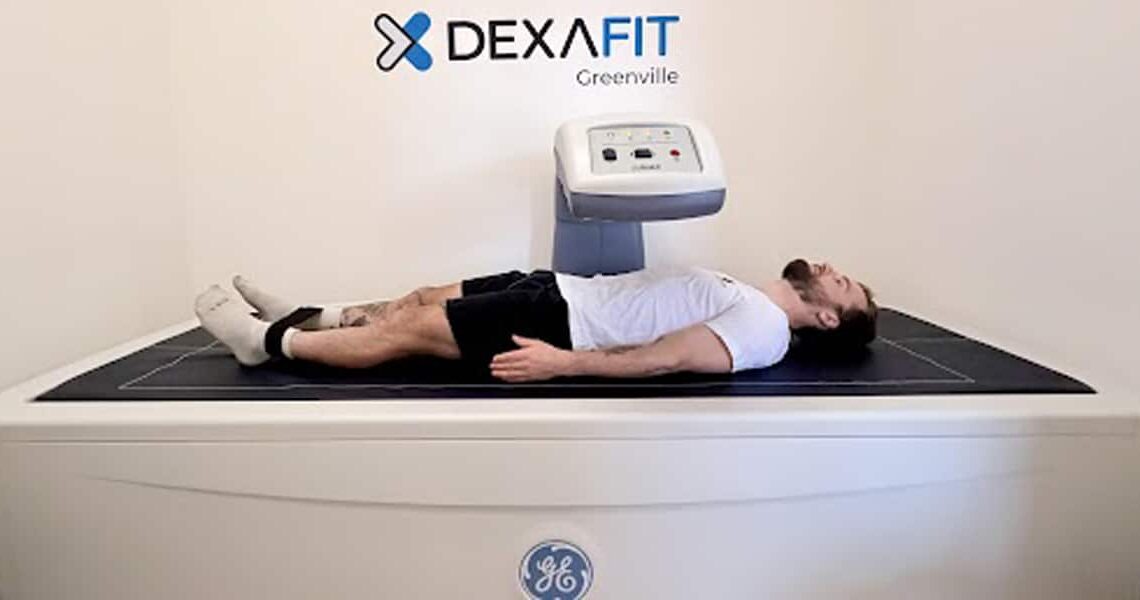

In many professional teams and sports medicine facilities, medical screenings are routine and valuable tools used to identify problems before—or shortly after—they arise. When this happens, healthcare providers can intervene sooner, often with better outcomes and at lower cost to the patient. In the absence of screening, unseen issues remain unseen, and small problems can quietly grow into much larger ones. Nowhere is this more true than when it comes to bone health.
In my time as a sports dietitian, I have consistently argued that understanding bone health—and the factors that contribute to or detract from it—is not just good practice for athletes, but a medical necessity.
The issue is not that athletes don’t care about their bones. It’s that most of us don’t think twice about them until something goes wrong. With bone, what’s out of sight is truly out of mind, and this is compounded by a lack of awareness around how and when bone health should be assessed.
Athletes Are Not the General Population
Athlete bone health is not the same as non-athlete bone health. Depending on the demands of training, athletes often place higher mechanical stress on bone, which can stimulate bone growth and strength over time.
However, this is not universally true.
For some sports—particularly cycling, running, swimming, and rowing—the training process can actually be detrimental to bone health. This is extremely problematic given that poor bone health is largely irreversible and not uncommon. Cyclists, for example, have been shown to have up to a sevenfold higher rate of osteoporosis compared to runners, although runners can also be at elevated risk depending on training load, fueling, and body composition.
What Determines Bone Health?
When assessing bone health, there are two primary factors to consider: how much bone you have (bone mineral density) and how that bone is built (bone architecture).

Bone mineral density (BMD) reflects how much mineral is packed into bone tissue and is associated with stiffness and strength at the population level. Since most bone mass is formed around puberty, the best way to increase BMD is to participate in a variety of impact-based sports starting at an early age to maximize peak bone mass. Adequate fueling and appropriate weight gain must also be prioritized, and delayed puberty should be avoided.
If you’re over 18 years old, you can still improve bone strength through mechanical loading and sound nutrition; however, the net change will be lower than during adolescence.
That said, BMD alone does not tell the full story. Differences in bone protein quality, microstructure, and organization—collectively referred to as bone architecture—help explain why two individuals with similar BMD scores can have very different fracture risk.
Both matter.
Bone Strength = Bone Quantity (BMD) × Bone Quality (Architecture)
Why Certain Bones Are More Vulnerable
Bone tissue exists in two main forms:
- Compact (cortical) bone: the dense outer layer providing stiffness and resistance to bending
- Cancellous (trabecular) bone: the lighter, spongy inner network that absorbs impact
Trabecular bone, found in areas like the spine and hip, has a higher metabolic turnover. This makes it more responsive—but also more vulnerable. Bone architecture can deteriorate before measurable bone density loss occurs, meaning fracture risk may rise even when BMD appears normal. This is why relying on BMD alone can miss early bone compromise in athletes.
How Is Bone Health Measured?
The most common way to assess bone health is through a DXA scan (Dual-Energy X-ray Absorptiometry). DXA uses a very low-dose X-ray—far less radiation than a standard diagnostic X-ray—to assess total body composition or specific skeletal regions.

From a single scan, you can obtain:
- Total and regional BMD
- Fat mass and lean mass (absolute and percentage of body weight)
- Trabecular Bone Score (TBS), which provides insight into bone microarchitecture
Results are reported as standard deviation scores compared to reference populations:
- Z-scores (age-, sex-, and ethnicity-matched; used in athletes)
- T-scores (young adult reference; used primarily over age 50)
In the general population:
- ≤ −2.5 = Osteoporosis
- −1.0 to −2.4 = Osteopenia
- +1.0 = Strong
- +2.0 = Very strong
Special Considerations for Athletes
Because of repeated mechanical loading, athletes are expected to have higher bone density than non-athletes. High-impact athletes often show 5–30% higher BMD, while endurance athletes frequently do not.
As a result, the American College of Sports Medicine (ACSM) and the International Olympic Committee (IOC) define normal bone health in athletes as a Z-score ≥ −1.0 rather than −2.0.
- A Z- or T-score < −1.0 may warrant further evaluation
- In high-impact athletes, a Z-score below 0.0 may be an early warning sign
- BMD should be paired with TBS whenever possible
- Bone health assessment should be routine, not reactive
How Often Should Bone Health Be Assessed?
Bone adapts slowly, and short-term changes may fall within measurement error. Still, waiting 5–10 years between screenings sends the wrong message—that bone health is neither urgent nor modifiable.
From a preventive perspective, annual or biennial screening works well for many cyclists, particularly elite athletes manipulating body composition or those with known risk factors.

Who Really Needs a DXA Scan?
Personally, I believe everyone should have a DXA scan as part of their standard medical screening at least every two years. However, you should strongly consider earlier and possibly more frequent screening if one or more of the following apply to you:
Hormones & Life Stage
- Delayed puberty, missed menstrual cycles, menopause, or advancing age (50+)
Body Composition & Energy Availability
- Low BMI or low muscle mass
- Chronic under-fueling, RED-S, eating disorders, or frequent weight cycling
Nutrition & Lifestyle
- Inadequate calcium intake; low vitamin D, protein, or total energy intake
- Smoking, excessive alcohol intake, or high caffeine intake
Medications & Medical Conditions
- Long-term steroid use, proton pump inhibitors (PPIs), or anticonvulsants
- Gastrointestinal, endocrine, kidney, or autoimmune conditions
Training Load & Injury History
- Rapid increases in training volume or intensity
- Minimal resistance training
- History of stress fractures or low-trauma fractures
Lastly, it should be acknowledged that some athletes experience anxiety around body composition testing. In these cases, working with a facility and a sports dietitian or physician who can track trends while blinding specific values allows athletes to benefit from screening without unintended harm. This may require some searching, but knowledgeable and understanding professionals do exist and can provide appropriate support.
References
- Rector, R. S., Rogers, R., Ruebel, M., & Hinton, P. S. (2008). Participation in road cycling vs running is associated with lower bone mineral density in men. Metabolism: clinical and experimental, 57(2), 226–232. https://doi.org/10.1016/j.metabol.2007.09.005
- Jonvik, K. L., Torstveit, M. K., Sundgot-Borgen, J., & Mathisen, T. F. (2022). Do we need to change the guideline values for determining low bone mineral density in athletes?. Journal of applied physiology (Bethesda, Md. : 1985), 132(5), 1320–1322. https://doi.org/10.1152/japplphysiol.00851.2021
- HILKENS, LUUK1,2; VAN SCHIJNDEL, NICK1; WEIJER, VERA1,2; BOERBOOM, MARLEEN1; VAN DER BURG, ESTHER1; PETERS, VELIBOR1; KEMPERS, ROBERT3; BONS, JUDITH4; VAN LOON, LUC J. C.1,2; VAN DIJK, JAN-WILLEM1. Low Bone Mineral Density and Associated Risk Factors in Elite Cyclists at Different Stages of a Professional Cycling Career. Medicine & Science in Sports & Exercise 55(5):p 957-965, May 2023. | DOI: 10.1249/MSS.0000000000003113
- International Osteoporosis Foundation. (2025). Bone biology.https://www.osteoporosis.foundation/health-professionals/about-osteoporosis/bone-biology (osteoporosis.foundation)
The post Bone Health & DXA Screening for Cyclists appeared first on PezCycling News.